Category: Uncategorized
NELGA Holds Land Conflicts and Dualism Workshop for Traditional Stakeholders in Cameroon
From February 14th to 17th, 2021, NELGA Central Africa Node will hold a land governance workshop on legal dualism and land conflicts to provide a framework for exchanges, knowledge sharing, and discussions between academics and traditional guardians.
On the one hand, the workshop aims to build a consensus on stimulating research based on real customs. On the other hand, to converge the views of academicians and traditional authorities on the urgent need to take customs and research in effective land conflict management.
Land plays a significant role in people’s daily activities around the world. At the same time, it is the subject of several conflicts. One of the most significant causes of land conflicts in African states is land dualism from the cohabitation of modern and customary laws. Cameroon is one example of a country where legal pluralism is exercised due to the coexistence of English and French rights inherited with customary law. This legal dualism generates land conflicts that come in various forms. Studies show that it is important for African states to develop land policies that promote conflict prevention, peace restoration, and the consideration of African realities.
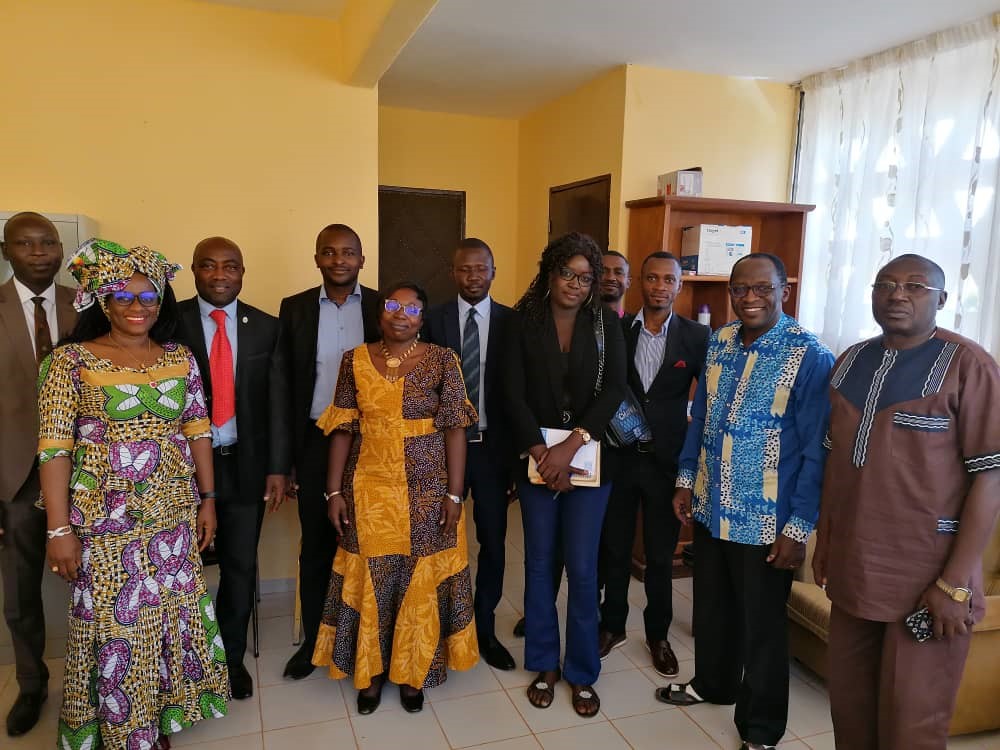
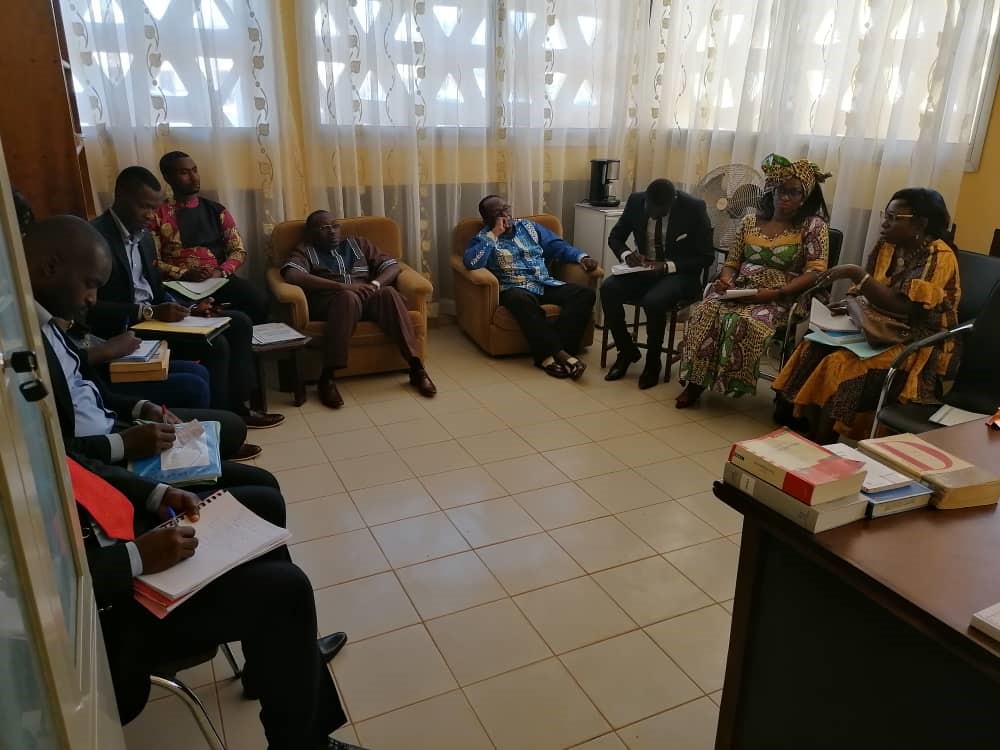
The workshop holding at NKOLANDOM Tourist Center in Ebolowa, Cameroon, brings together traditional leaders who are members of RECTRAD and other land stakeholders.
Raising awareness and equipping participants with the concept of dualism of Cameroon’s land tenure regime, conflicts resulting from normative dualism, and effective management of land disputes are some of the workshop’s expected outcomes. Participants will also learn the role and participation of customary authorities in land conflict resolution.
Les universités francophones d’Afrique de l’Ouest commencent un atelier sur l’adaptation du programme de gouvernance foncière pour répondre à l’agenda de l’UA sur la terre
Les universités francophones d’Afrique de l’Ouest organisent un atelier régional en vue de sensibiliser les académiciens et les praticiens de la gouvernance foncière sur le contenu et la mise en application des lignes directrices relatives à l’élaboration des programmes de formation adaptées en gouvernance foncière dans le contexte de l’Afrique de l’ouest francophone.
Cet atelier s’inscrit dans le cadre de la mise en œuvre des lignes directrices de l’Union Africaine en matière de gouvernance foncière en Afrique.
Le Réseau d’excellence sur la gouvernance foncière en Afrique (NELGA) NÅ“ud francophone de l’Afrique de l’Ouest Francophone, invite les parties prenantes de la gouvernance foncière à un atelier de deux jours à Dakar qui se déroulera du 14 -15 avril, 2021 à Dakar, Sénégal (par vidéoconférence), sur la mise en Å“uvre des lignes directrices du programme de gouvernance foncière au sein des universités institutions de la région.
L’atelier vise à clarifier la manière dont le programme de gouvernance foncière peut être développé conformément aux recommandations de l’Union africaine (UA) tout en restant ancré dans le contexte ouest-africain.
Selon le coordinateur régional de NELGA, le professeur Ibrahima Arona Diallo, “L’atelier offre aux experts fonciers, aux spécialistes, aux décideurs et aux chercheurs l’occasion de tirer des leçons des expériences de l’exercice de conception de programmes d’études précédent par NELGA et des mises en Å“uvre ultérieures à travers le continent. Fournissant aux participants les connaissances, les outils et les méthodes pour aider les universités à revoir les programmes de formation foncière, cet atelier devrait encadrer une feuille de route pour aider les universités respectives à mettre en Å“uvre les lignes directrices pour l’élaboration de programmes sur la gouvernance foncière en Afrique et à introduire des programmes de maîtrise en gouvernance foncière dans la région.”
Les Lignes directrices pour l’élaboration des programmes sur la gouvernance foncière en Afrique soutiennent la mise en Å“uvre de la Déclaration de l’UA sur les questions et défis fonciers en Afrique. Les directives abordent les systèmes fonciers complexes du continent et les demandes croissantes de pertinence et d’adéquation dans ce secteur. Les lignes directrices facilitent l’élaboration et la révision des programmes pour garantir que les diplômés universitaires et les professionnels du foncier soient mieux qualifiés pour relever les défis de la gouvernance foncière en Afrique. On s’attend à ce que les lignes directrices fournissent des idées pour le développement de programmes qui permettent aux étudiants de mieux comprendre les questions de gouvernance foncière et leur effet sur l’élaboration et la mise en Å“uvre des politiques.
The African Journal on Land Policy and Geospatial Sciences Releases Its 1st Issue of 2021
The African Journal on Land Policy and Geospatial Sciences (AJLP & GS) publishes research articles in Land Policy and Geospatial Sciences thematic areas. The main intention of encouraging innovation, promoting the exchange of knowledge and scientific outcomes, released its first issue in May 2018. The journal has since released four volumes and 12 issues, including the most recent edition for 2021.
The new issue is the first edition of the year 2021, and it has nine articles published. The articles cover land administration, land governance, land corruption, land conflicts, and technical and digital solutions to land-related problems.
The AJLP & GS encourages researchers, professors, and professionals to publish and promote their research findings at the African, regional and global levels. The research piece in the journal improves the land governance sector, inspire future researchers to dig more and back up policymakers’ decisions with actual evidence.
To access the journal, click on the link below.
Guidelines for the Development of Curricula on Land Governance in Africa
The Guidelines for the Development of Curricula on Land Governance in Africa support the implementation of the AU Declaration on land issues and Challenges in Africa, in particular the call for Member States to, “Build adequate human, financial, technical capacities to support land policy development and implementation”.
The guidelines are informed by key background documents prepared by the LPI, including the Regional assessment reports on land policy in Africa which identified, among other things, the challenges in Africa’s land sector; The background document on capacity development in Africa prepared from an examination of key capacity gaps in the land sector; Assessment report on industry needs and gaps in curricula for land governance in Africa. The Curricula also tends to be technical, lacking in the social/cultural, political, economic and environmental aspects crucial to land governance.
Further challenges on capacity in Africa include limited focus on Land tenure, political economy of land, autochthonous populations’ ties to land and cultural/traditional land governance.
Click here to download: https://repository.uneca.org/handle/10855/2387
L’Université de Kindia, Guinée, présente un programme de maîtrise en gouvernance foncière
Le gouvernement guinéen a récemment identifié la nécessité de former des professionnels pour relever les défis du pays dans le secteur de la gouvernance foncière. Ces défis entravent la mise en œuvre des politiques publiques de développement en Guinée, qui dépendent de ses ressources naturelles pour le développement du pays.
Il est évident qu’en raison du contrôle illégal des terres, du pluralisme des normes foncières entre l’État et les individus, des stratégies qui se chevauchent des acteurs internes et externes, ainsi que des codes fonciers et étatiques dépassés, le gouvernement a perdu le contrôle d’une grande partie de ses biens fonciers et immobiliers publics. Il est devenu difficile de trouver ou de récupérer des terres pour simuler des développements urbains et ruraux.
Afin de renforcer la capacité des professionnels à combler ces lacunes, le Réseau d’excellence sur la gouvernance foncière en Afrique, nœud francophone d’Afrique de l’Ouest, travaille avec l’Université de Kindia, en Guinée, pour mettre en place un programme de maîtrise sur la gouvernance foncière. Le nouveau programme tirera parti des Lignes directrices de l’Union africaine pour l’élaboration de programmes d’études sur la gouvernance foncière en Afrique. Un atelier sous-régional de quatre jours, du 12 au 16 janvier 2021, s’est tenu à l’Université Kindia dans le but de finaliser et de valider le programme universitaire de gouvernance foncière.
Au cours de l’atelier, le contexte du programme de diplôme et le processus de mise en place ont été présentés avec les objectifs des cours. Elle a été suivie par l’accréditation des cours, l’organisation de cours par semestre, la définition de la concentration du programme et du soutien aux ressources humaines, et enfin la production d’un document finalisé. L’atelier s’est terminé par un aperçu d’un plan de mise en œuvre du programme de maîtrise et d’autres domaines de collaboration.


2nd Arab Land Conference – NELGA to Hold Masterclass and Roundtable on Land Governance in North Africa
NELGA will participate in the Second Arab Land Conference held from 22nd to 24th of February 2021 in Cairo, Egypt. The conference marks an important milestone in the roadmap towards establishing good land governance in the Arab region. It will promote good land management and land administration by focusing on the priorities of the Arab Land Initiative: promote collaboration and coordination, develop and share knowledge, develop capacities of individuals and organizations, and support the implementation of land-related programs and interventions.
NELGA will present two sessions at the event, a roundtable discussion titled “Land and Tenure Systems in North Africa: A Scoping Study” and a masterclass tagged “Capacity Development to Enable Good Land Governance.”
Both sessions will come up on the 24th of February, 2021. These sessions focus on developing programs that meet the Government’s and professionals’ needs in the capacity building required for sustainable development. The challenges for capacity development and ongoing initiatives, and future opportunities will also be presented.
More information on this activity will be released as the conference dates draw near.
The conference will allow both in-person and virtual attendance. To register for the conference, kindly visit https://arabstates.gltn.net/second-arab-land-conference/
University of Ngaoundéré, Cameroon appoints Professor Tchotsoua as NELGA Focal Point
The NELGA project was officially launched in Central Africa on the 17th and 18th of January 2019 in Yaoundé, Cameroon. The first phase of the project lasted 18 months under the terms of the agreement signed between the University of Yaoundé I (as the regional node of the project) and GIZ. With GIZ planning to continue supporting this initiative, the execution of a second phase of the project is underway. Following this, the need to get more higher education institutions in Central Africa involved in the project was considered crucial. It is with this intention that NELGA organized missions to explore the possibilities of collaborations with new universities and other prospective partners both in Cameroon and other NELGA member countries in Central Africa.
The NELGA coordination team with the support of the GIZ Technical Advisor to NELGA are carrying out these missions in Cameroon. On the other hand, in countries like Chad, Gabon, CAR and DRC, the NELGA focal points will provide the lead in the consultation processes. By the end of these assignments, new universities, research institutions and other active actors working in land related sectors will be included in phase 2 of the project.
The mission to the university of Ngaoundéré in Cameroon is one of the missions that intended to explore and reflect on future collaborations between the university and the NELGA project. It had main objectives of presenting the project to the academic authorities of the University, highlighting its approach to land governance, illustrating its fields of action as well as the results of the first phase. It also focused on discussing the likely co-preparation and follow-up processes of involving the university in the second phase. Similarly, the mission intended to present various support opportunities available within the NELGA network and its partners to students currently working on land issues.
The NELGA team with the services of Professor TCHOTSOUA Michel met the Rector of the University of Ngaoundéré and presented the purpose of the mission. The Rector was certainly positive to the idea of integrating the University of Ngaoundéré into the Network, on the understanding that the interest of the University in the issues of land use planning, management of natural resources and development in the broad sense of the term no longer needs to be compromised. She consequently appointed Professor TCHOTSOUA as NELGA Focal Point at the University of Ngaoundéré.
The team correspondingly met the deans and vice deans in charge of research as well as the heads of departments of the Faculties of Arts, Letters and Human Sciences, Faculties of Legal and Political Sciences, Faculties of Economics and Management. Except for the Faculty of Economics and Management that the theme is still new for, all the other faculties have courses on or related to the land tenure system in their curricula. All the Heads of Departments met expressed the desire to actively contribute to the activities of NELGA, particularly in the context of updating the curricula of the courses to align them with the directives of the African Union on land tenure in Africa. The sensitization tour ended successfully with the meeting with the Master and Doctorate students to whom offers of scholarships and mobility were presented.


University of Ngaoundéré, Cameroon appoints Professor Tchotsoua as NELGA Focal Point
The NELGA project was officially launched in Central Africa on the 17th and 18th of January 2019 in Yaoundé, Cameroon. The first phase of the project lasted 18 months under the terms of the agreement signed between the University of Yaoundé I (as the regional node of the project) and GIZ. With GIZ planning to continue supporting this initiative, the execution of a second phase of the project is underway. Following this, the need to get more higher education institutions in Central Africa involved in the project was considered crucial. It is with this intention that NELGA organized missions to explore the possibilities of collaborations with new universities and other prospective partners both in Cameroon and other NELGA member countries in Central Africa.
The NELGA coordination team with the support of the GIZ Technical Advisor to NELGA are carrying out these missions in Cameroon. On the other hand, in countries like Chad, Gabon, CAR and DRC, the NELGA focal points will provide the lead in the consultation processes. By the end of these assignments, new universities, research institutions and other active actors working in land related sectors will be included in phase 2 of the project.
The mission to the university of Ngaoundéré in Cameroon is one of the missions that intended to explore and reflect on future collaborations between the university and the NELGA project. It had main objectives of presenting the project to the academic authorities of the University, highlighting its approach to land governance, illustrating its fields of action as well as the results of the first phase. It also focused on discussing the likely co-preparation and follow-up processes of involving the university in the second phase. Similarly, the mission intended to present various support opportunities available within the NELGA network and its partners to students currently working on land issues.
The NELGA team with the services of Professor TCHOTSOUA Michel met the Rector of the University of Ngaoundéré and presented the purpose of the mission. The Rector was certainly positive to the idea of integrating the University of Ngaoundéré into the Network, on the understanding that the interest of the University in the issues of land use planning, management of natural resources and development in the broad sense of the term no longer needs to be compromised. She consequently appointed Professor TCHOTSOUA as NELGA Focal Point at the University of Ngaoundéré.
The team correspondingly met the deans and vice deans in charge of research as well as the heads of departments of the Faculties of Arts, Letters and Human Sciences, Faculties of Legal and Political Sciences, Faculties of Economics and Management. Except for the Faculty of Economics and Management that the theme is still new for, all the other faculties have courses on or related to the land tenure system in their curricula. All the Heads of Departments met expressed the desire to actively contribute to the activities of NELGA, particularly in the context of updating the curricula of the courses to align them with the directives of the African Union on land tenure in Africa. The sensitization tour ended successfully with the meeting with the Master and Doctorate students to whom offers of scholarships and mobility were presented.


Land Governance Panel at GIZ Landhub 2020 Meeting Highlights Best Practices for Research-Policy Linkages
The Network of Excellence on Land Governance in Africa (NELGA) held a panel discussion at the just concluded GIZ LandHub 2020 Meeting to highlight evidence-based best practices on how research can influence policy development and reforms.
The 90minute online panel discussion on December 15, 2020, demonstrated the crucial relationship between research and good policy advice in the land sector. The lively discussion, with panelists from Landportal, World Bank, GIZ, GIGA, policymakers, and the land governance community, discussed the theme: Research-Policy Linkages: How to improve Evidence-based Policy Advise in the Land Sector.
For those who could not make it, find a summary of the discussion below.
Researchers and Policymakers Collaboration Benefits the Land Governance Space
Land Commissions consisting of policymakers, researchers, private sectors, and CSOs can identify important research areas and integrate data and research results into decision making – Willi Zimmermann
A point that cuts across all panelists was the call for increased collaboration between policymakers and researchers as this benefits everyone involved in the policy reform landscape. There should be a deliberate way for researchers, decision-makers, and policy writers to collaborate. The promotion of strategy, policy ownership, and transparency within governmental institutions are equally important. Researchers need to get policymakers involved in research work as it is vital for promoting the research findings in policy recommendations.
If policymakers collaborate with researchers, it will be easier for governments to make evidence-based policy advice. This starts with formulating relevant research questions together. Researchers need to understand the different timeframes and logic that is available to the policymaker to make decisions. Both sides, the researcher and policymaker, should listen to one another and collaborate in solving identified problems. The policymaker should be open enough to listen to what the science (data and research) say.
Research policy forums could be useful means of discussing opportunities offered by both researchers and policymakers – Desire Tchigankong
Regardless of this inclusive collaboration, the policymakers should remain objective and encourage freedom of research as this helps produce the desired data for evidence-based decision making. Furthermore, encouraging private sectors and CSO’s involvement can provide innovative ways to promote a high level of advocacy, useful to back up policies with science.
The discussion acknowledged how the COVID situation gave an excellent lesson to politicians and policymakers worldwide. It was said the pandemic enhanced the importance of collaborations between policymakers and researchers not only in the health sector but also in other sectors such as agriculture and land tenure.
The Need for More Capacity Building
This leads to another point raised by both the policymakers and participants on capacity building as both groups agreed that research and training are inseparable, especially for young people. Capacity building for young researchers, academics, land experts, and potential policymakers goes a long way to create the future we want to see in the land governance space. There is a need to enhance researchers’ capacities in producing policy briefs and opinion pieces as the researcher should have the ability to make these. Policymakers should build their capacity to learn and truly understand the change that research could bring in the policy sector.
Presenting and Communicating Data is Crucial
Though data can be powerful to shape decisions, unfortunately, availability and access to land data remain low as ranked by the open data barometer. Data needs to remain accessible and available to a wide range of stakeholders. These stakeholders leverage this data to present evidence-based agile approaches that respond to policymakers’ circumstances. For instance, the coronavirus pandemic showed how vital data and information are to policymaking. The rise in digital platforms played a crucial role in data sharing inclusively during the health crisis. Such inclusive communication ensures an increased understanding of the policymakers, bringing them into the discussion space and presenting data in a simple format for ease of understanding and action. The academia must turn lengthy evidence-based research into a call for action, policy briefs, opinion pieces, and cooperate with international organizations for increased synergy, dissemination and implementation.
Discussions like these are of high relevance because they conduct a reality check to see if we are on the right track and what else we need. Both the scientific community and policymakers should work on their perceptions towards evidence-based decision making and learn to truly understand the change that research could bring in the policy sector. Under the directive of ALPC, NELGA participated in the meeting by the support of GIZ’s Strengthening Advisory Capacities for Land Governance in Africa program.
GIZ LandHub 2020 Meeting – Research-Policy Linkages: How to improve Evidence-based Policy Advise in the Land Sector?
An evidence-based policy helps to make well-informed decisions about policies, programs and projects, by placing the best available evidence from research at the heart of policy development and implementation. This also accounts for policymaking in the land sector.
But how can we implement evidence-based policy in a sector where data is usually scarce or difficult to access? How can we respond with policies and programs to increasingly rapid global trends while still relying on robust science? And what is the key to good science communication, given that the validity of scientific facts is coming under increasing pressure worldwide? In this session, we would like to address these questions and focus on the relationship between good research and policymaking in the land sector and how good science communication can work.
To address these questions, SLGA and NELGA will host a panel discussion at GIZ LandHub 2020 meeting.
Date: December 15, 2020
Time: 13:00 – 14:30 (UTC+1)
Venue: Online meeting
Through a panel discussion covering different perspectives, we want to learn from the experiences of experts and conduct a reality check to see if we are on the right track and what else we need.
Panelist include:
• Dr Insa Flachsbarth – GIGA Institute for Africa Affairs
• Laura Meggiolaro – Land Portal
• Dr Wael Zakout – World Bank
• Prof. Paul Tchawa – Secretary-General, Ministry of Environment, Nature Protection and Sustainable Development, Cameroon